Over many years, RegencyFN has been commissioned by six different United Nations agencies to produce documentary work on environment, human rights, food security, telecommunications, and global development. The full portfolio sits below.
We can. Six different UN agencies have commissioned RegencyFN over many years. The work sits in agency archives, in school curricula, in policy education materials and in the broadcast slates that carried it on first release.
For our corporate partners, this matters for a single reason. Adjacency. When a brand commissions a documentary through us, the work sits within an institutional context that paid media cannot replicate. Buyers, regulators and ministries treat the platform with the same seriousness they treat its other contents.
From the Earth Summit to the most recent ITU engagement, the documentary work that built the institutional relationship.
 1992
1992
Documentary work commissioned to capture the proceedings and outcomes of the Earth Summit, the most consequential global environmental conference of the twentieth century. The work supported the creation of Agenda 21, a 40-chapter framework that defined sustainable development for governments, corporations and civil society for the next thirty years.
Disseminated across 170+ participating nations. Still cited by climate, finance and policy professionals.
 1995
1995
A documentary record of structural reform across the UN. Modernisation of the General Assembly. The formation of the International Criminal Court. The expansion of UN engagement with business and civil society.
Used as an internal and external reform reference. Documented the shift from a state institution to a multi stakeholder body.
 1998
1998
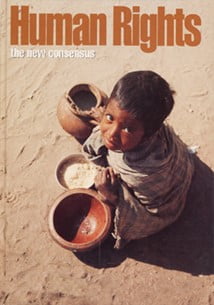
A documentary that established the framework of fourteen legal standards underpinning modern human rights protection, with particular focus on the developing world. Bridges four pillars of UN policy: human rights, democracy, development and peace.
Reference asset for UNHCR's long term solutions mandate. Cited in human rights education and policy contexts.
 2002
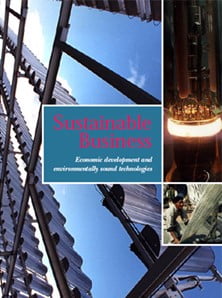
2002A documentary on the integration of environmental responsibility with corporate competitiveness. Pollution control, renewable energy adoption, technology transfer, and the early case for solar, wind and biotechnology.
Shaped early corporate sustainability dialogue across UNEP's member network. Informed the cleaner production case decades before ESG.
 2008
2008
An educational programme designed in alignment with the Italian school curriculum for students aged 11 to 14. Built around the WFP's mandate to eradicate hunger, with teacher manuals and classroom materials.
Distributed across Italian schools. Demonstrated how documentary scales into formal education systems.
 2014
2014
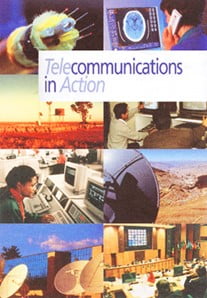
A documentary on telecommunications as development infrastructure: wireless, satellite, broadcasting and emerging multimedia. The work illustrated how connectivity functions as a multiplier across health, education, agriculture and governance.
Reached non-traditional audiences in policy and ministerial environments. Contributed to cross-ministry development planning.
The most recent extension of the WFP educational programme model. Documentary at the scale of a national curriculum, designed for educator-led classrooms.
EnableME2 builds on the documentary methodology established with the WFP in 2008. The programme aligns documentary content with national curriculum frameworks, packaging classroom materials, teacher manuals and educator training alongside the broadcast component.
Independent measurement runs across both reach and educator satisfaction. Reach is counted at the learner level. Satisfaction is measured against the educator's own programme criteria, not ours.
Suitable for corporate partners running long-running education, skills and youth-development programmes that need credible third-party measurement.